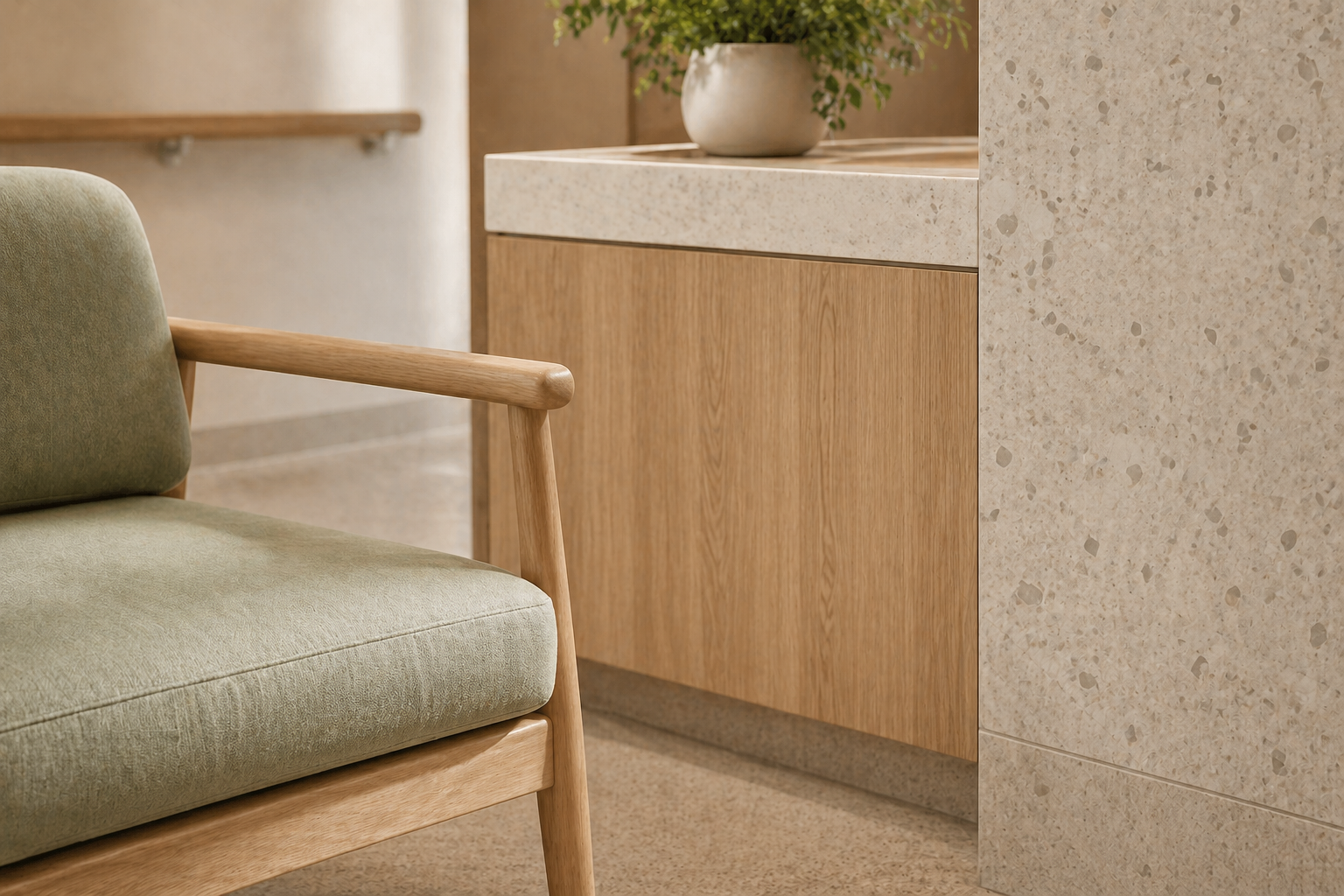
Healthcare: Designing for Calm, Clarity, and Trust
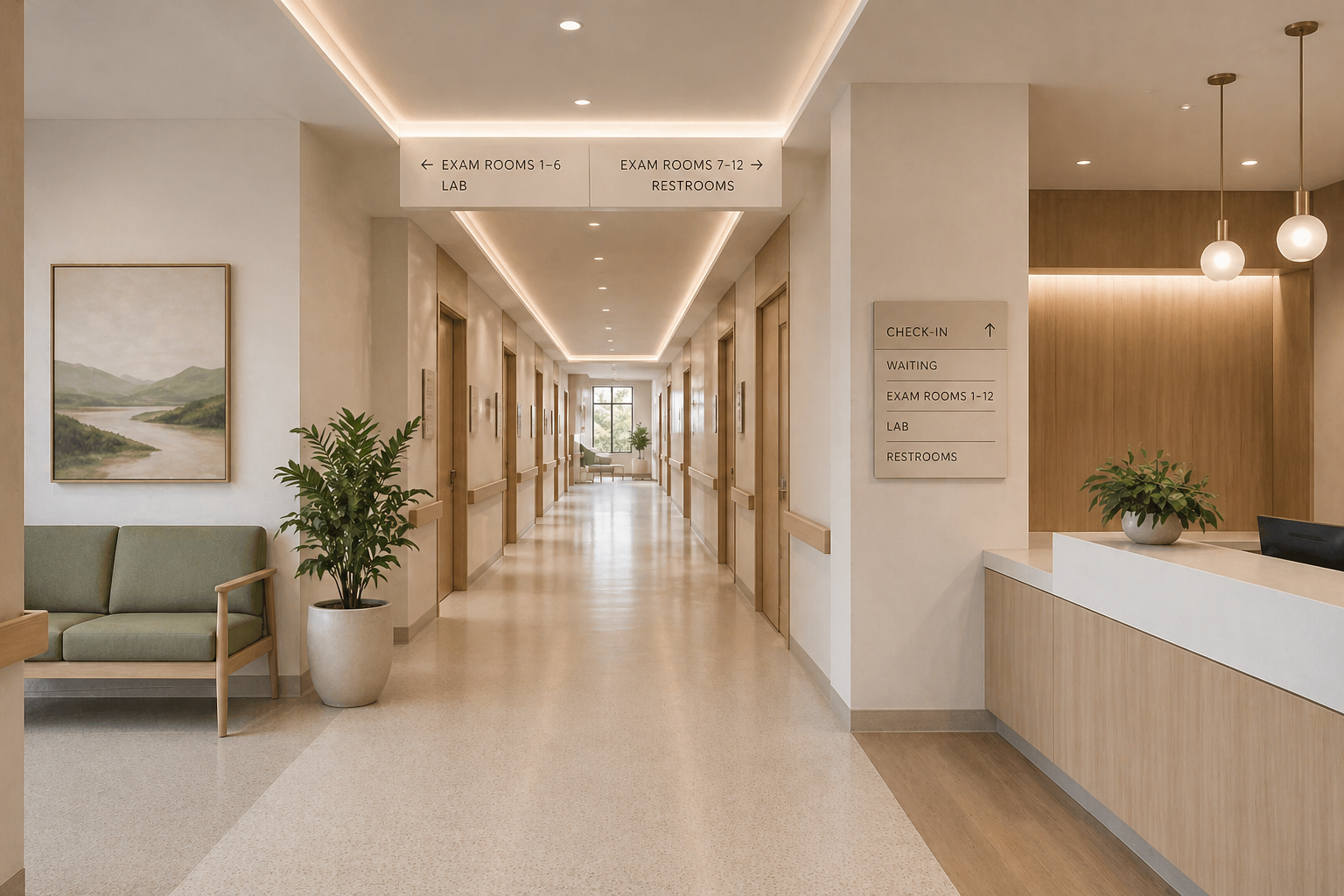
Healthcare environments are often defined by urgency—but the best spaces feel composed, clear, and reassuring.
A quiet, minimalist approach reduces stress for both patients and staff. Clean circulation, intuitive wayfinding, and natural materials create an atmosphere of calm without sacrificing performance.
Natural light, soft acoustics, and warm neutral palettes help regulate emotion and improve the overall experience of care. Spaces feel less clinical and more human.
At Canyon Collective, healthcare design is about trust—expressed through clarity, precision, and restraint.
Beyond Clinical: Designing for Human Experience
Patients don’t experience healthcare as a system—they experience it as a sequence of moments. Arrival, waiting, consultation, treatment. Each transition shapes perception.
Minimalist design removes friction at every step:
Clear entry sequences that reduce uncertainty
Legible circulation paths that minimize reliance on signage
Calm waiting environments that lower perceived wait times
When space is intuitive, anxiety decreases. When anxiety decreases, care improves.
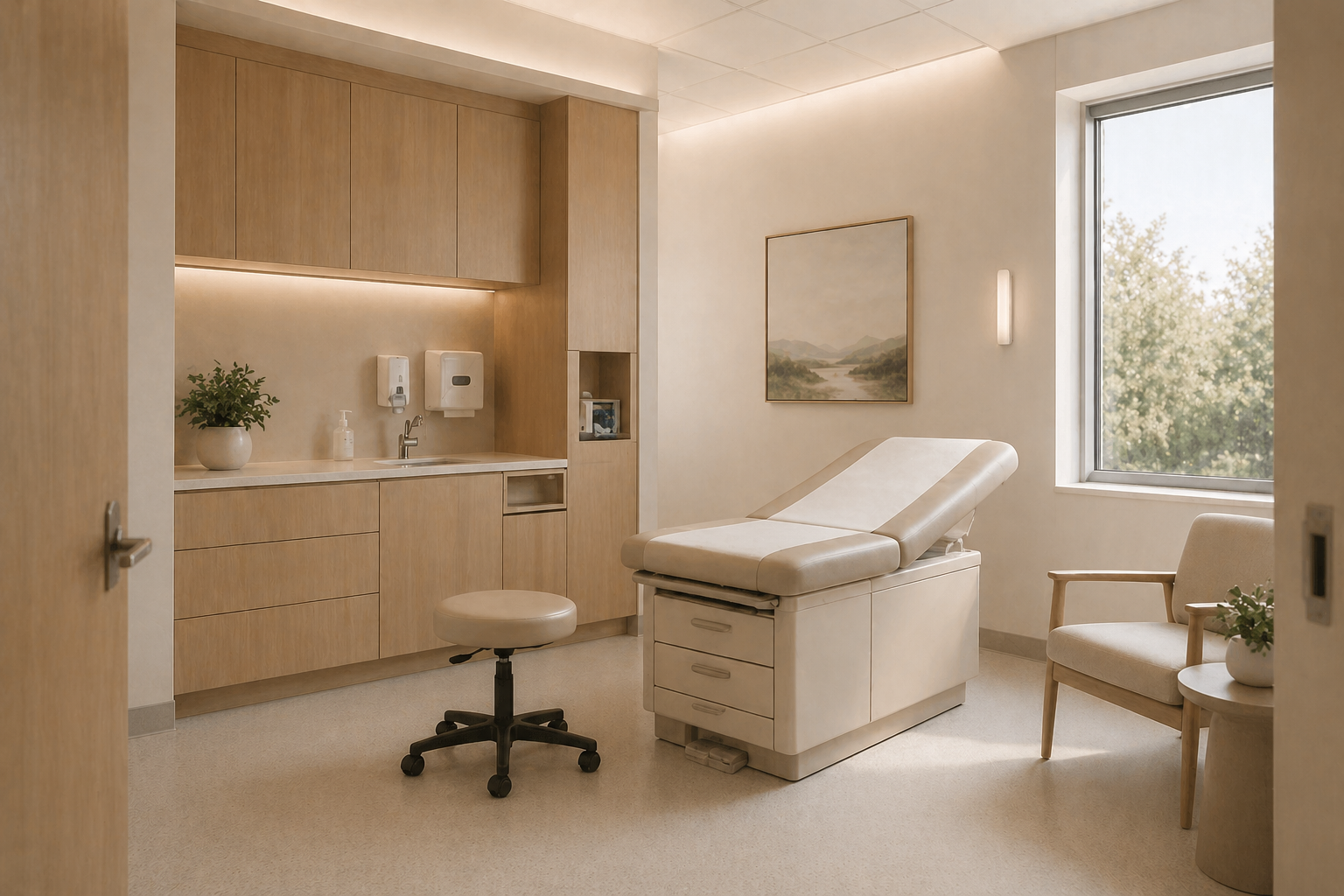
The Role of Light, Material, and Acoustics
In high-performance healthcare environments, sensory control is critical.
Natural light supports circadian rhythm and reduces stress for both patients and staff
Warm, tactile materials such as white oak and honed stone introduce familiarity and comfort
Acoustic softness—through textiles, panels, and spatial planning—reduces noise fatigue and enhances privacy
These elements work together to create an environment that feels grounded, quiet, and stable.
Wayfinding Without Overload
Traditional healthcare environments rely heavily on signage. Minimalist healthcare design shifts that burden to architecture.
Changes in material or ceiling height signal transitions
Sightlines guide movement intuitively
Lighting gradients subtly direct flow
The result is a space that communicates without overwhelming.
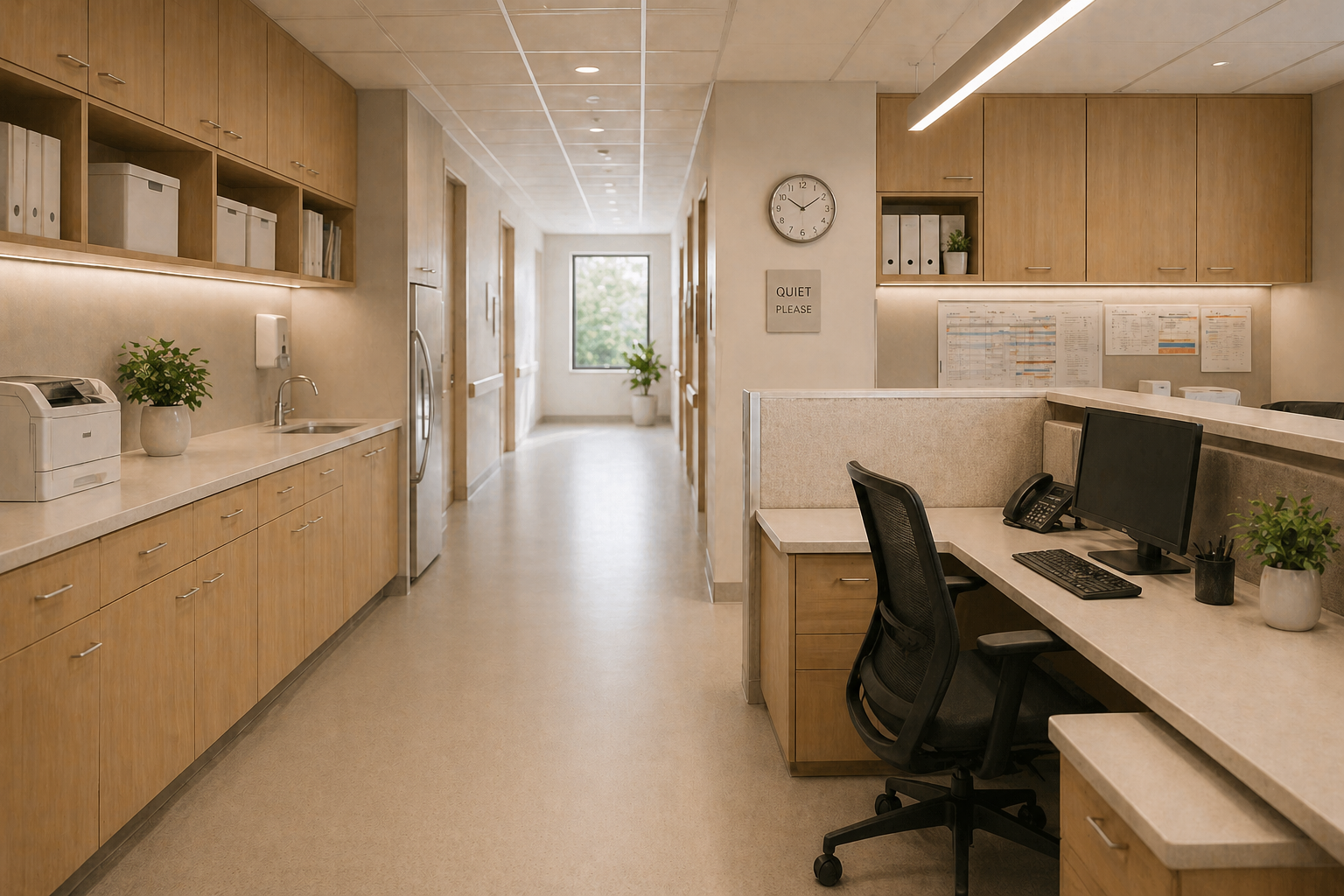
Designing for Staff Performance
Clarity is not only for patients—it directly impacts staff efficiency.
Streamlined back-of-house circulation reduces wasted movement
Clear zoning improves team coordination
Reduced visual noise supports focus during high-stakes tasks
When environments are calm and legible, staff can perform with greater precision and less fatigue.
Longevity and Adaptability
Healthcare evolves rapidly, but spaces shouldn’t require constant reinvention.
A restrained material palette and flexible infrastructure allow environments to adapt without losing cohesion.
Modular planning supports future program shifts
Neutral foundations accommodate changing technologies
Durable materials maintain integrity over time
This approach protects both operational continuity and long-term investment.
The Value of Trust in Design
Trust is not communicated through branding alone—it is felt through space.
A calm, intentional healthcare environment signals competence, care, and control. It reassures without explanation.
This is the essence of quiet luxury in healthcare: nothing excessive, nothing distracting—only what is necessary, executed with precision.