
Designing for Performance: A Minimalist Approach to Commercial Interiors
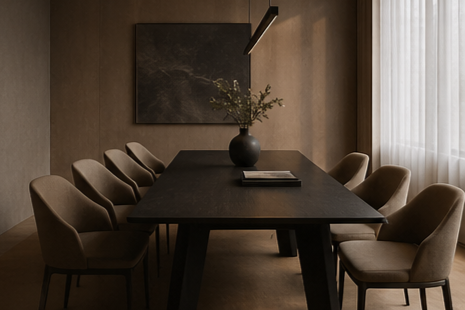
In today’s commercial landscape, the most effective spaces are not the loudest—they are the most intentional. Quiet, minimalist interiors are redefining how businesses express value, support productivity, and create lasting impressions.
At Canyon Collective, we approach commercial interior design through the lens of functional living—where restraint, clarity, and precision shape environments that perform effortlessly.
Beyond Aesthetics: Clarity as Function
Minimalism is often misunderstood as emptiness. In reality, it is about removing friction.
A well-designed commercial space should feel intuitive—where movement is natural, purpose is clear, and nothing is unnecessary.
Key principles include:
Refined circulation: Clean, unobstructed pathways that guide behavior without signage overload
Purpose-driven zoning: Each area defined by use, not decoration
Intentional restraint: Eliminating visual noise to improve focus and experience
The result is a space that feels calm, but operates with precision.
The Psychology of Quiet Spaces
Silence in design is powerful. When visual clutter is reduced, people think more clearly, move more confidently, and engage more deeply.
Natural light becomes the primary design feature, enhancing mood and rhythm
Muted palettes reduce overstimulation and support concentration
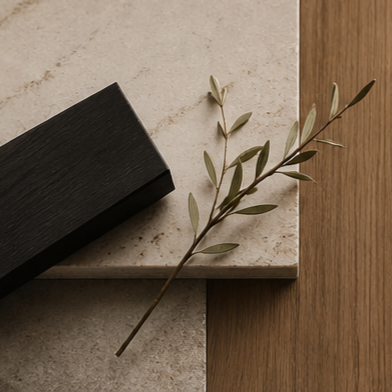
Material honesty—wood, stone, and soft textures—creates a grounded, human experience
These elements don’t demand attention—they earn it over time.
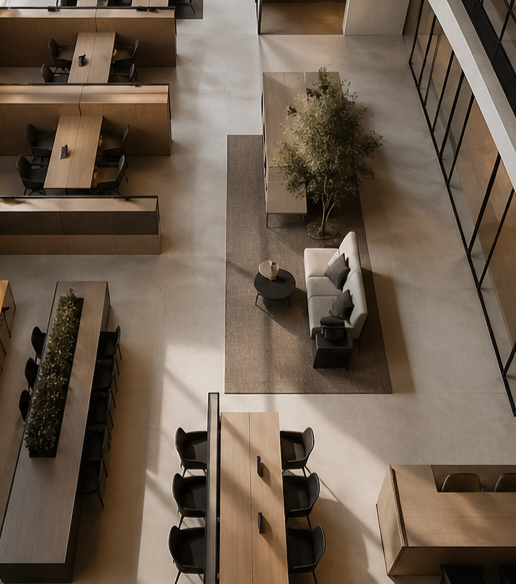
Brand as Atmosphere
In minimalist commercial interiors, branding is not applied—it is embedded.
Rather than relying on overt graphics or excessive signage, brand identity is expressed through:
Proportion and scale
Material selection and craftsmanship
Spatial rhythm and pacing
This approach creates a quieter form of luxury—one that communicates confidence without needing to explain itself.
Designing for Longevity
Trends fade quickly. Restraint endures.
Minimalist commercial spaces are inherently adaptable because they are not tied to stylistic excess. By focusing on structure, material quality, and flexibility, these environments evolve naturally over time.
Strategies include:
Modular elements that integrate seamlessly into the architecture
Neutral foundations that accommodate future brand shifts
Infrastructure designed for long-term performance
This reduces the need for constant reinvention—and protects the investment.
The Value of Less
Performance-driven design is not about adding more—it’s about removing what doesn’t serve.
A quiet, minimalist space:
Enhances productivity through clarity
Elevates brand perception through restraint
Supports long-term adaptability
It doesn’t compete for attention. It holds it.
At Canyon Collective, we design commercial interiors that prioritize function, clarity, and quiet luxury. Spaces that are deeply considered, highly efficient, and built to perform over time.