
Commercial Interior Design in Santa Barbara: Where Architecture, Nature, and Experience Meet
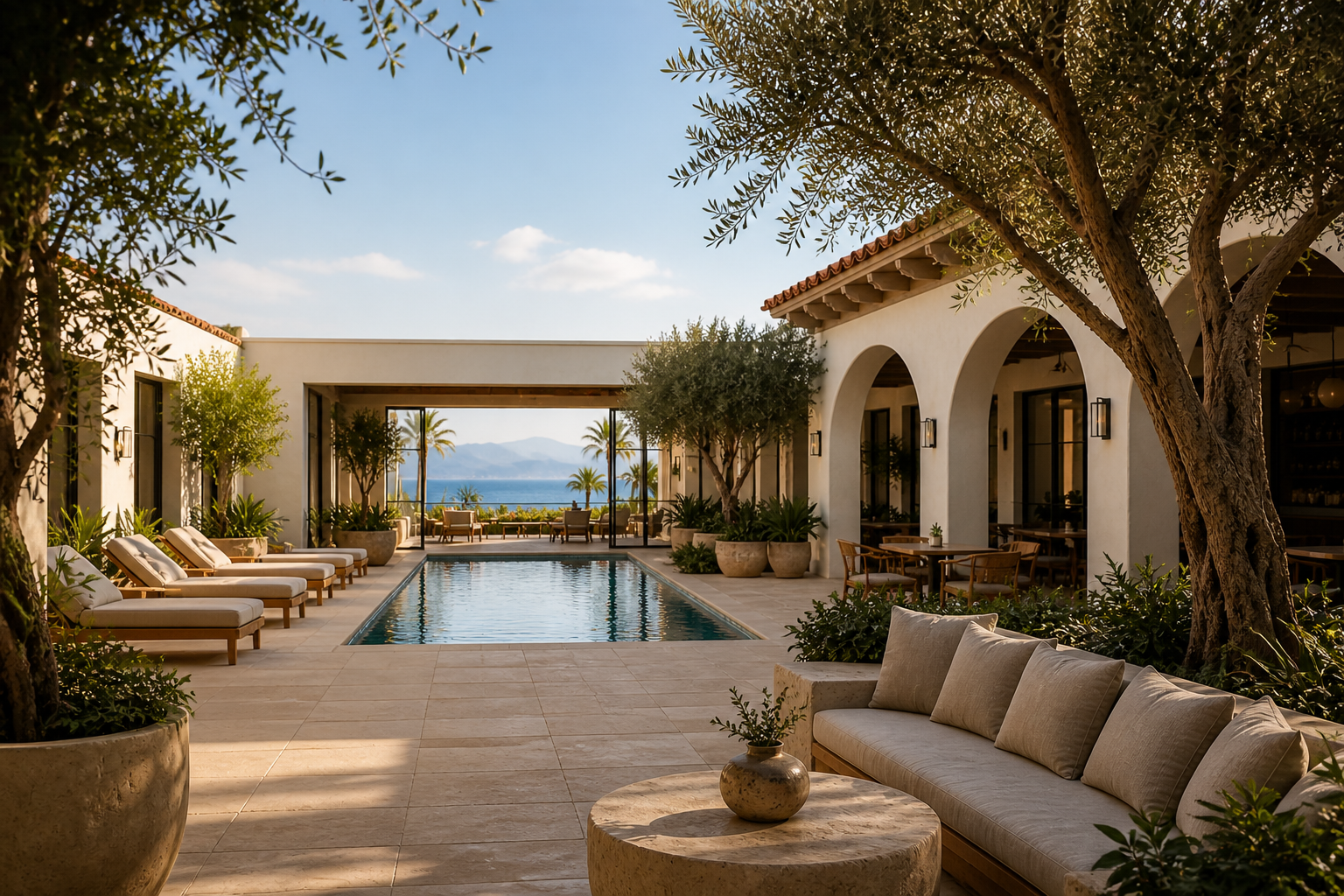
Santa Barbara has always been defined by its balance—between history and modern life, architecture and landscape, work and lifestyle. That balance is what makes commercial interior design in Santa Barbara uniquely challenging, and uniquely rewarding.
From Spanish Colonial Revival architecture to contemporary coastal spaces, the built environment here carries a strong sense of identity. White stucco walls, natural materials, courtyards, and an emphasis on indoor-outdoor living are not just stylistic choices—they are part of the cultural fabric of the city. For commercial interior designers, respecting that context is essential.
But good design in Santa Barbara goes beyond aesthetics.
Today’s commercial spaces—whether healthcare environments, boutique hotels, restaurants, or workplaces—are expected to do more. They need to function efficiently, support user experience, and respond to how people actually move through and interact with a space.
This is where commercial interior design becomes more than visual.
In healthcare, for example, clarity and flow are critical. Patients need intuitive wayfinding. Staff need efficient layouts that reduce friction throughout the day. These same principles are increasingly relevant in hospitality design. Guests don’t just want a beautiful hotel—they want an experience that feels effortless, where movement between spaces feels natural and connected.
Santa Barbara’s environment reinforces this expectation.
With the ocean on one side and the mountains on the other, people here are deeply aware of their surroundings. Natural light, ventilation, and a connection to outdoor space are not luxuries—they are expected. Courtyards, terraces, and transitional spaces become essential tools in shaping how a commercial environment feels and performs.
At the same time, there is a strong cultural value placed on lifestyle balance. Spaces need to support both activity and pause. Energy and calm. Social interaction and private retreat.
For commercial interior design, this means creating environments that are layered and adaptable. A space may feel quiet and grounded in the morning, then shift into something more social and dynamic in the evening. Restaurants open into courtyards. Lobbies become gathering spaces. Workplaces incorporate areas for both focus and connection.
This approach is especially relevant as Santa Barbara continues to evolve as a destination for both tourism and business.
Hospitality design, in particular, is moving toward more integrated experiences—where architecture, interior design, and landscape work together to create a cohesive environment. The most successful projects are no longer defined by individual elements, but by how everything connects.
Ultimately, commercial interior design in Santa Barbara is about more than responding to a style.
It’s about understanding how place, culture, and environment shape the way people experience space—and designing accordingly.